Carousel
Hirer favourite
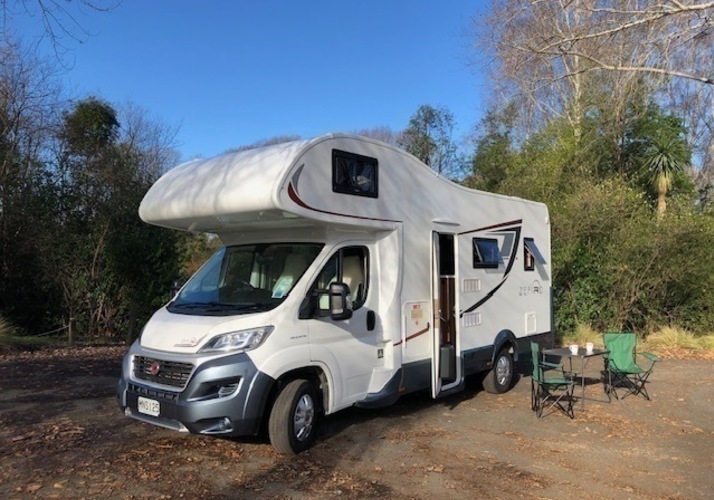
Indy - For 6 Berth Family Adventures in Style
- Location and Distance
Christchurch
- Price
- From$385per day
- Avatar

- Owner Name
Jackie & James
- Reviews
5.0 (14)
- Berths
6
Skipped to Main Content
)
Rated 4.9/5
with 13,142 reviews
Rated 4.9/5
Roadside Assistance
and protection included
Roadside Assistance
24/7 Support
We're always here to help
24/7 Support
)
This is what a New Zealand campervan trip actually looks like. Someone's home on weekends, with the bedding they chose, the kitchen broken in, route notes from the trip they did last summer, parked at a Coromandel headland or a Wanaka lakeside spot you found yourself. Not a fleet box with RENT ME on the side.
Camplify is the New Zealand platform where private owners list their vans when they are not using them. You rent directly from the person who built the rig: Real character, prices set by individuals, and many vans carry the Certified Self-Contained green sticker that unlocks freedom camping at hundreds of DOC and council sites across the country.
We have hosted Americans on every kind of New Zealand road trip: a 14-day South Island full lap from Christchurch, a 10-day North Island loop out of Auckland, a cross-Tasman split with the Interislander ferry mid-trip, a base-camp stay in Queenstown with the van delivered to a holiday park. These are the four things first-time American renters ask us about, answered upfront.
Visa, Mastercard and American Express work through Camplify. You pay in NZD; your bank handles the conversion. No need for a New Zealand bank account or local SIM card to book or pay.
Bring your home state driver license and your passport. New Zealand accepts a US license for stays under 12 months. We recommend an International Driving Permit (IDP); you can pick one up from AAA.
First hour on quiet streets before any open road. Roundabouts go clockwise. Most New Zealand roads are slower and quieter than US interstates; plan for an average of 60 km per hour, not 80. Owners walk you through the dash and the controls before you pull away.
Every Camplify rental includes comprehensive protection that covers international drivers. No carve-outs for US licenses, no extra underwriting, no add-on damage cover to buy at pickup. The same coverage a New Zealander gets, you get. Excess reduction options are available at booking.
A snapshot of what is currently bookable across New Zealand. Tap any van to see availability, photos, and the owner's profile, or open the full search.
Hirer favourite
Christchurch
Jackie & James
5.0 (14)
6

Responds rapidly
Te Awamutu
Alina & Prabh
4.9 (4)
4

Responds rapidly
Warkworth

Matthew
5.0 (5)
2

Responds rapidly
Christchurch
Tony
5.0 (1)
4

Responds rapidly
Tauranga

Jocelyn
5.0 (3)
6

Hirer favourite
Christchurch

Rodney
5.0 (14)
6

Responds rapidly
Christchurch

Andrew
4.6 (2)
4

Responds rapidly
Auckland

Ryan
5.0 (7)
6
)
Every July it gets pushed to next March; every March, to October. The trip is still there. The calendar is the only thing that has not said yes yet. New Zealand has summer somewhere most of the year and a ski season that opens up the South Island in winter. The hard part is not the weather, the flight, or the planning. The hard part is blocking two or three weeks and clicking the button.
)
New Zealand is one of the few countries where it is legal to sleep in a campervan on a lakeside, a coastal headland, or a remote DOC site, with no campground booking and no fee. The unlock is a single green sticker on the rear of the van: Certified Self-Contained.
A self-contained van carries its own fresh water, its own wastewater storage, and a fixed toilet, so it can stay overnight without leaving a trace. The country tightened the certification rules in 2025 (a green warrant card now sits beside the sticker), and councils enforce them with $400 fines for vans parked overnight in freedom-camping areas without one. Many Camplify owners renewed their certification under the new rules; ask before booking and the owner will confirm.
Most international visitors do not pick up the van the morning after they land. Pick the pattern that fits your trip; ask the owner for anything bespoke.
Land in Auckland, Wellington, Christchurch or Queenstown. Spend two or three days clearing the jet lag and seeing the city, then take handover when you are ready. Owners are flexible on dates.
Use the near-airport filter (special_place=airport) to find vans within 15 minutes of AKL, WLG, CHC, or ZQN. Many owners deliver to your terminal or first hotel.
Fly into Auckland, road trip down through the ferry, fly home from Queenstown. Either pay an owner for one-way collection, or fly internally and rent at the destination city. The airport filter works in every gateway.
)
10 days on New Zealand’s South Island
From Christchurch to Milford Sound, featuring iconic stops at Lake Tekapo, Aoraki / Mount Cook, Wanaka, and Queenstown before returning via the scenic inland route.
)
6 days around the North Island
Auckland, the Coromandel, Rotorua geothermal, Lake Taupo, the Tongariro Alpine Crossing, finish in Wellington.
)
Auckland to Christchurch road trip
The cross-island classic: drive south through Wellington, board the Interislander ferry, finish across the Southern Alps.
)
A van adventurer's guide to Wanaka
Where to camp, where to walk, when to go, and the freedom camping spots locals tell visitors about.
)
9 things to know before you road trip NZ
Practical reading from real Kiwi van owners: pace, weather, what to pack, how to plan around the ferry.
)
Beginner's guide to freedom camping
How the self-contained system works, where to freedom camp legally, the apps you actually need, and the etiquette that keeps it free.
)
Camping in New Zealand: The ultimate international traveller's guide
What you need to know as a visitor: how camping actually works here, what to plan before you book, how to hire a campervan or motorhome, and everything you need to know once you're on the road.
)
Hire a campervan or motorhome in NZ with airport pickup
Start your adventure as soon as you arrive. Here's how to pick up your RV at the airport, from a local owner.
)
The ferry. The Interislander runs Wellington to Picton (roughly 3.5 hours), and Bluebridge runs the same crossing. Either takes a campervan; both fill up in peak summer and school holidays. Book ahead. Cost runs around $200 to $400 NZD each way for a van plus passengers.
Alpine passes. South Island routes through Arthur's Pass, Lewis Pass, and the Crown Range over to Queenstown can require snow chains in winter (June through September). Chains rent for around $50 NZD per trip from Christchurch and Queenstown outlets. Many owners stock them.
Distances. New Zealand looks compact on a map and is. Auckland to Wellington is 8 hours; Christchurch to Queenstown is 6. The catch is the roads are slower than US interstates - winding, two-lane, and following the coastline. Plan for 60 km per hour average, not 80, and the trip suddenly fits.
)
The 2-week South Island bucket-list
Two weeks out of Christchurch hitting the postcard list: Tekapo, Aoraki Mount Cook, Wanaka, Queenstown, Milford Sound, Dunedin, Kaikoura. The campervan replaces the rental car, the hotel and the dinner reservation in one. A Certified Self-Contained van doubles your overnight options on this lap.
)
The LOTR and Hobbiton pilgrimage
Auckland to Wellington via Matamata (Hobbiton), Tongariro (Mt Doom), and the South Island filming locations: Edoras at Mt Sunday, Chetwood Forest at Paradise, Pelennor Fields at Twizel. Two weeks for the Trilogy completionist; four days for a hits compilation. The kind of road trip Americans fly 13 hours for.
)
Queenstown adventure base
Have the van delivered to a Queenstown holiday park and anchor for a week. Day-trip Milford Sound, Glenorchy, Wanaka, Arrowtown. Bungy off the Kawarau Bridge, skydive over the Remarkables, jet-boat the Shotover. The in-nature alternative to a hotel and a hire car.
)
Two ways Camplify owners deliver in New Zealand. Motorhomes and campervans: owners drop them at the airport, your first-night hotel, or a pickup point you choose; you drive from there. Caravans: owners tow them all the way to your campsite, holiday park, or DOC site, set them up, and pick them up at the end; you never tow. The caravan-to-destination option is unique to peer-to-peer; depot fleets can't do it. Owner-set rates, typically NZD 1.50 to 2.00 per kilometre from their home base round-trip.
)
A typical Camplify host is someone who hires out their self-contained van during the months they are not using it themselves. Many have hosted international travellers before and are happy to drop the van at an airport hotel so the first morning is easy.
Owner-listed vans come with the bedding the owner picked, a kettle that works, a fridge that fits a week of groceries, a current self-containment certificate, and route notes from trips the owner has done themselves. Messages run through Camplify so everything stays on record if the satnav sends you down a track that does not exist.
Pick up from these four gateway cities and head for the coast, the lakes, the alps, or the geothermal country in your campervan. Or have a van delivered straight to your favourite holiday park or DOC site.
)
Auckland
Gateway to the Coromandel, the Bay of Islands, the Waikato, and Rotorua geothermal. Ferry south for a full-country lap. New Zealand's busiest international airport.
)
Wellington
The capital and the ferry terminal for the Interislander south to Picton. Compact, walkable, the natural midpoint of any North-plus-South itinerary.
)
Christchurch
The South Island gateway. Tekapo, Mount Cook, the West Coast, Wanaka, and Queenstown all sit within a day of here. Chains rent locally for the winter passes.
)
Queenstown
The South Island base camp. Milford Sound, Glenorchy, Arrowtown, and Wanaka are all day trips. International airport with direct flights to the US East Coast in season.
Can I rent a campervan or RV in New Zealand on my US license?
Yes. A valid US state driver license plus your passport is enough to legally rent and drive a campervan or RV in New Zealand for visits up to 12 months. We strongly recommend bringing an International Driving Permit (IDP) as well. You can get one from AAA for around $20 in about 10 minutes. Carry both.
Will my van be Certified Self-Contained for freedom camping?
Most likely yes, and you should ask the owner before booking to confirm. New Zealand tightened the self-containment certification rules in 2025; vans that pass now carry a green sticker on the rear and a green warrant card. A self-contained van legally parks overnight at hundreds of DOC sites, council freedom-camping areas, and remote spots at zero accommodation cost. Vans without the certification can still rent; they just have to use powered holiday parks for overnight stops. Apps like Campermate and Rankers map the legal freedom-camp spots for you.
Can I take the van between the North and South Islands?
Yes. The Interislander and Bluebridge ferries both cross between Wellington and Picton, both carry campervans up to standard motorhome size, and both take roughly 3.5 hours. Cost runs around $200 to $400 NZD each way depending on van length and season. Book ahead in peak summer and school holidays; spaces fill weeks out. Plan the ferry as part of the trip itself; the crossing through the Marlborough Sounds is a highlight on its own.
What if the van breaks down somewhere remote?
Every Camplify rental includes 24/7 roadside assistance covered by the booking fee. The owner is also reachable through Camplify messaging, and most owners arrange a like-for-like replacement van or a holiday-park night if the issue cannot be fixed roadside. Mobile coverage is good across New Zealand on the main routes, with patchier spots in Fiordland and the West Coast. A satellite messenger is worth carrying for off-grid hikes, though most travelers do not need one for the standard road-trip routes.
Will my US phone work in New Zealand, or do I need a local SIM?
US phones on T-Mobile, AT&T, or Verizon all work in New Zealand on roaming, though daily fees stack up on long trips. The cheaper move is a local prepaid SIM at the airport (Spark and One NZ are the main carriers, both cover the main routes well) or an international eSIM like Airalo before you fly. You do NOT need a local SIM to book or pay; everything works from the US.
What is included in Camplify protection for US drivers?
Every Camplify rental includes comprehensive protection with damage and third-party liability coverage, no separate underwriting for international drivers. The coverage that applies to a New Zealander applies to you. Each van listing shows the excess (deductible) and what is covered. Excess reduction options are available at booking if you want to lower the deductible.
Can I get the campervan delivered to a holiday park or DOC site without driving it myself?
Yes. Camplify is the only peer-to-peer platform in New Zealand that does this. Owners regularly deliver vans to holiday parks, DOC campgrounds, beaches, hiking trail heads, and private properties; you fly to your nearest gateway airport, take a transfer or domestic flight to your destination, and the van is set up and waiting. Owners typically charge NZD 1.50 to 2.00 per kilometre from their home base round-trip. Pickup at the end of the rental works the same way; owners come to you.
Can I pay with a US Visa, Mastercard, or American Express?
Visa and Mastercard work through Camplify on every listing. Some owners accept American Express; ask before booking. You pay in NZD and your bank handles the conversion. You do not need a New Zealand bank account or local SIM card to book or pay. Roughly, 1 USD is 1.6 NZD as of 2026.
When is the best time of year for a New Zealand road trip?
December through February is summer in both islands - peak season, longest days, warmest weather, and the school-holiday crowd. March through April and October through November are shoulder seasons with great weather and fewer people. June through September is winter; the South Island opens up for the Queenstown and Wanaka ski seasons, and the North Island stays mild. Pick your weeks first; New Zealand has a good answer for every month.
How long should I plan for a meaningful New Zealand road trip?
Two weeks gives you a great South Island lap or a thorough North Island loop with a few days in Auckland. Three weeks lets you do North plus South with the ferry mid-trip; that is the sweet spot for most American travelers. Less than 10 days works for a focused trip out of one city, like Christchurch to Queenstown and back, or an Auckland-Coromandel-Rotorua loop.
Can I drive a campervan to Milford Sound, Mount Cook, or Fiordland?
Yes to all three. Milford Sound is a long winding drive from Te Anau (around 2 hours each way) through Fiordland; the road is sealed and most campervans handle it fine, but check height and length per listing. Mount Cook village has campsites and the road in is straightforward. Standard 2-berth and 4-berth campervans access all the iconic South Island stops; off-road 4WD vehicles are not needed for the main routes.
What does gas (petrol) cost, and are there tolls?
Gas (called petrol here) runs roughly $2.40 to $2.80 NZD per liter, which works out to about $5 to $6 USD per US gallon depending on the exchange rate. Diesel campervans are common and 20 to 30 percent cheaper to run on long trips. New Zealand has very few toll roads (a small stretch of the Auckland Northern Gateway is the main one); rural roads are toll-free. Owners brief you on any local quirks at handover.
Live listings from owners around the country. Two-berth conversions for couples, four-berth campervans for friends or family, off-grid builds for the South Island. Most are within 30 minutes of a gateway airport, many delivered. Open the full search.

Responds rapidly
Auckland

YZcamper
5.0 (6)
3

Responds rapidly
Auckland
YZcamper
4.8 (10)
3

Responds rapidly
Auckland
YZcamper
4.9 (4)
3

Responds rapidly
Auckland
YZcamper
4.9 (5)
3

Responds rapidly
Auckland
YZcamper
4.6 (4)
3

Responds rapidly
Auckland
YZcamper
4.5 (7)
3

Responds rapidly
Auckland
YZcamper
4.5 (5)
3

Responds rapidly
auckland
YZcamper
5.0 (6)
4