Camping guides
Road tripping New Zealand: 12 essential tips guide
)
If there's a country built for road trips, it's New Zealand. Dramatic mountain passes, glittering fiords, thermal valleys, and surf beaches all within a few hours' drive of each other. Whether you're planning a two-week loop of the South Island or a month-long adventure across both islands, hitting the road in a campervan, caravan or motorhome is the best way to experience Aotearoa on your own terms.
With over 2,000 Kiwi-owned campervans, motorhomes, and caravans available to hire through Camplify, and more than 10,000 five-star reviews from travellers who've already made the journey, you're in good hands before you even turn the key. Here's everything you need to know to make your New Zealand road trip one for the books.
)
1. Choose the right vehicle for your trip
The vehicle you hire will shape your entire experience, so it's worth spending time on this decision before anything else. There are three main types to consider:
Campervans
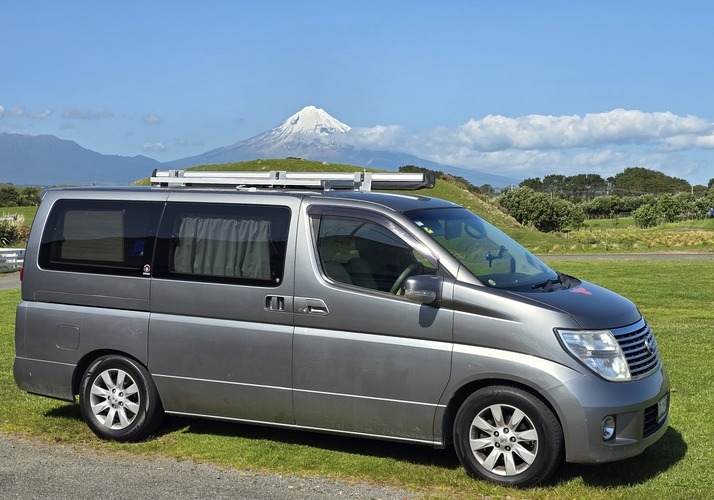
A campervan is a self-contained van where the cab and living area share the same space. Compact and easy to manoeuvre, they're ideal for couples, solo travellers, or friends who want to tackle New Zealand's narrower back roads and get off the beaten track. Daily rates on Camplify start from $85.
Motorhomes
A motorhome is built on a larger truck or bus chassis with a separate living area — most come with a shower, toilet, full kitchen, and generous sleeping arrangements. They're the go-to choice for families or groups who want the comfort of home without compromising on amenities. If you're planning to stay off-grid for several days, the larger leisure battery capacity in most motorhomes will see you through.
Caravans
A caravan is towed behind your own vehicle and is ideal if you want a home base to return to each evening while exploring the surrounding area by car. Perfect for families with young children, or anyone who prefers to set up camp and stay a while.
The Camplify difference: Every owner on Camplify is personally verified and has set up their vehicle through years of real adventures — you're not hiring from a corporate fleet. You can browse, filter by dates, price, berths, and whether the van is dog-friendly, and request to book with no upfront payment required. Pick up directly from the owner, who'll walk you through everything before you hit the road.
2. Decide: North Island, South Island, or both?
New Zealand is not small. The drive from Cape Reinga at the top of the North Island to Bluff at the bottom of the South Island is around 2,100 km — and that's without any detours. A common mistake first-timers make is trying to cover both islands in under two weeks.
North Island suits travellers who want warmer weather, geothermal landscapes (Rotorua, Taupō), Māori culture, the beaches of the Coromandel, and the buzz of Auckland and Wellington. A comfortable loop takes around 10–14 days.
South Island is where New Zealand's most jaw-dropping scenery lives: Fiordland, the Milford and Routeburn tracks, the Southern Alps, glacier valleys, Queenstown, and the wild West Coast. Budget at least two weeks; many travellers spend a month and still feel like they've only scratched the surface.
If you have 3–4 weeks or more, the Interislander ferry between Wellington and Picton is a scenic crossing that lets you do both without backtracking. For anything shorter, choose one island and explore it properly.
3. Pick the best time of year for your road trip
New Zealand has four distinct seasons, and each offers a different experience on the road.
Summer (December–February) is peak season — long days, warm temperatures, and the best beach conditions. It's also the busiest and most expensive time, so book your campervan well in advance.
Autumn (March–May) is arguably the sweet spot: the crowds thin out, the colours across Central Otago and the Marlborough Sounds are stunning, and the weather is still reliably good.
Winter (June–August) transforms the South Island into a ski destination. The Remarkables, Coronet Peak, Mount Hutt, and Cardrona are all accessible from major campsite hubs. Pack warm layers, Merino wool base layers, a good beanie, and check that your van has adequate insulation and heating. Note that many mountain passes require snow chains in winter — carry a set and always check NZTA road conditions before you drive.
Spring (September–November) brings wildflowers, fewer crowds, and some of the most dramatic skies you'll encounter. Weather can be changeable but the freedom to roam with far fewer campervans on the road is hard to beat.
)
4. Plan your route (but leave room to wander)
The beauty of a campervan road trip is flexibility — you're not locked into hotel check-ins or fixed schedules. That said, a loose route is essential, particularly in peak season when popular freedom camping spots fill up fast.
Some of New Zealand's most iconic road trip routes include:
The Twin Coast Discovery Highway (Northland, North Island) — mangrove estuaries, giant kauri forests, and 90 Mile Beach
The Pacific Coast Highway (East Coast, North Island) — surf towns, vineyards, and the Mahia Peninsula
State Highway 6: The Great Ocean Road (West Coast, South Island) — glaciers, rainforest, and wild Tasman beaches
The Southern Scenic Route (Southland & Fiordland) — Milford Sound, Te Anau, and the Catlins
On driving distances: New Zealand's roads are winding, often two lanes, and through mountainous terrain — always add extra time to your estimates. Auckland to Wellington, for example, takes around 8–9 hours of pure driving; the West Coast glacier route between Franz Josef and Queenstown is 4–5 hours. Aim to drive no more than 3–4 hours on any given day so you actually have time to stop and take it all in.
5. Understand freedom camping rules
Freedom camping — staying overnight in a public space outside of a designated campsite — is one of the great joys of a New Zealand road trip. But the rules matter, and ignoring them can result in fines of up to $200.
The key distinction is between self-contained and non-self-contained vehicles:
A self-contained campervan has a toilet, fresh water, and waste storage fully contained within the vehicle. These display a blue self-containment certification sticker and can legally freedom camp on most public land.
A non-self-contained vehicle — one without a functioning toilet — must stay in a campsite with facilities every night.
The CamperMate app and Rangi app are both excellent free tools for finding freedom camping spots, DOC campsites, and dump stations near you on the road.
Want the full breakdown? Read our complete guide to freedom camping in New Zealand.
6. Budget realistically for your road trip
A New Zealand road trip can be done on a range of budgets. Here's what to factor in:
Campervan hire: Daily rates on Camplify start from $85 for a basic campervan and scale up with size, season, and features. Because you're hiring directly from a Kiwi owner, you're often getting better value than a corporate rental fleet — and every hire includes comprehensive damage protection and 24/7 nationwide roadside assistance as standard.
Campsites: Freedom camping in a self-contained van is free. DOC (Department of Conservation) basic campsites typically cost $8–$15 per person per night. Holiday parks and powered sites range from $30–$100+ depending on location and facilities.
Fuel: Petrol is generally sold by the litre (expect $2.20–$2.80 NZD/L depending on region and timing). If your hired vehicle runs on diesel, note that Road User Charges (RUC) apply — these are collected separately from the pump at approximately $0.076 per km for light diesel vehicles, and will be itemised in your Camplify listing.
Toll roads: New Zealand has three tolled roads — the Northern Gateway (north of Auckland), and the Tauranga Eastern Link and Takitimu Drive (both in Tauranga). Pay online at NZTA, at most service stations near the roads, or call 0800 40 20 20.
Activities: There's an enormous amount to do for free — DOC walking tracks, viewpoints, beaches, and most thermal pools (outside of commercial operations). For paid activities, check Bookme for deals on everything from bungy jumps to whale watching.
)
7. Get your head around New Zealand roads
This one deserves its own section, because driving in New Zealand is genuinely different from driving in most other countries — and not in a way that should alarm you, but in a way you need to respect.
Drive on the left. If you're coming from North America, continental Europe, or Asia, this takes a day or two to get comfortable with.
Roads are narrow and winding. Even major state highways outside the main cities are two-lane roads with significant curves. This is particularly pronounced on the West Coast, through Fiordland, and on most of the North Island's regional routes.
Speed limits are 100 km/h on the open road — but that doesn't mean 100 km/h is always safe or sensible in a motorhome or caravan. Drive to the conditions.
Watch your height clearance. Low-hanging trees, tight carpark entrances, and ferry loading decks can all catch out larger motorhomes. Know your vehicle's dimensions before you set off.
Reversing with a large vehicle: If you're travelling with others, use a spotter when reversing in tight spaces — car parks, campsite bays, and narrow driveways all require care.
8. Book early, especially in peak season
New Zealand's most popular freedom camping spots and DOC campsites fill up in summer — sometimes days in advance. While spontaneity is one of the joys of campervanning, booking your first and last nights gives you a solid anchor, and reserving any DOC Great Walk campsite huts well in advance is essential if you're tackling the Tongariro Alpine Crossing, the Routeburn, or the Milford Track.
On Camplify, you can request to book with no upfront payment, and every listing clearly shows availability. Once your booking is confirmed, you'll receive the owner's contact details for a direct handover — whether that's a pick-up from their home, airport collection, or delivery to a campsite.
9. Don't skip the winter (but come prepared)
Winter travellers are often rewarded with something the summer crowds rarely see: an uncrowded Milford Sound with fresh snow on the peaks, a starlit sky over the Mackenzie Basin (New Zealand's International Dark Sky Reserve), and entire stretches of coastline to themselves.
If you're heading to ski fields, most allow campervans in their lower car parks — leave the van there and take the shuttle buses up. The Remarkables, Coronet Peak, Mount Hutt, and Cardrona all run regular shuttles from nearby towns.
)
Practical winter tips:
Connect to powered sites where possible to keep your van warm and charged
Always check NZTA Journey Planner for road conditions before driving mountain passes
Carry snow chains if venturing into alpine areas between June and September
Pack thermals, waterproof layers, and sturdy hiking boots
10. Learn a little about the places you're passing through
New Zealand's landscapes are inseparable from its cultural history. Māori place names appear on every road sign — Te Whanganui-a-Tara (Wellington), Tāmaki Makaurau (Auckland), Ōtautahi (Christchurch) — and each carries a story. Taking time to visit marae, engage with local iwi cultural experiences, and learn a handful of te reo Māori words will add an entirely new dimension to your road trip.
The New Zealand Tourism website has excellent guides to culturally significant sites, and many campgrounds in rural communities are on or adjacent to historically important land.
11. Use the right apps and resources
A few tools that will make your life significantly easier on the road:
CamperMate / Rangi — freedom camping spots, dump stations, fuel, and campsite reviews
MetService — New Zealand's most reliable weather forecasting app
NZTA Journey Planner — road conditions, closures, and travel time estimates
Bookme — discounted activities and experiences across both islands
Camplify app — manage your booking, contact your owner, and access roadside assistance from your phone
12. Embrace the unexpected
The best moments on a New Zealand road trip are rarely the ones you planned. A tip from a local about a hidden waterfall. A seal colony on a beach you pulled over to stretch your legs. An unexpected rainbow over Lake Tekapo. A spontaneous detour down a gravel road that leads to a hot spring with nobody else in sight.
New Zealand is sparsely populated — there are more sheep than people — and the further you get from the main tourist circuit, the more extraordinary it becomes. A self-contained campervan hired through Camplify gives you the freedom to follow those instincts. You have your kitchen, your bed, your home on wheels. The road is yours.
How to hire a campervan for your New Zealand road trip?
Getting on the road with Camplify takes three steps:
Find your campervan — Browse 2,000+ Kiwi-owned vans. Filter by dates, location, berths, price, and whether the van is dog-friendly. Daily rates start from $85.
Book with confidence — Request to book with no upfront payment. Every hire includes comprehensive damage protection and 24/7 nationwide roadside assistance as standard.
Off you go — Pick up directly from your owner for a full walkthrough, arrange airport collection, or have the van delivered to a campsite. Then hit the road.
Every owner on Camplify is personally verified. You're hiring from trusted Kiwis who know their vehicle inside out — not handing over cash to a corporate desk.
Search thousands of vans to hire in New Zealand
Find a vanThe information in this blog is accurate and current as of the date of posting. Please be aware that information, facts, and links may become outdated over time.