Carousel
Responds rapidly
‘Harmony’… she left ordinary behind
- Location and Distance
Ohope
- Price
- From$330per day
- Avatar

- Owner Name
Murray & Di
- Reviews
5.0 (10)
- Berths
4
Skipped to Main Content
)
Rated 4.9/5
with 13,142 reviews
Rated 4.9/5
Roadside Assistance
and protection included
Roadside Assistance
24/7 Support
We're always here to help
24/7 Support
)
Most campervan hire in New Zealand runs through fleet depots: the same vehicle, the same handover yard, the same form every time. Camplify works differently. Private owners (particulier) list their own campervans and motorhomes when they are not using them, and you hire directly from the person who owns the vehicle - the bedding they chose, the kitchen they broke in, route notes from trips they have driven themselves. Often better value, and always with local know-how.
Many Camplify vehicles are Certified Self-Contained, which lets you park overnight at hundreds of Department of Conservation and council freedom-camping sites across New Zealand at no accommodation cost.
We have hosted Dutch couples and families on three- and four-week laps of both islands. These are the four things Dutch travellers ask about first. No fuss, just the practical answers.
Visa and Mastercard work through Camplify. You pay in NZD and your bank handles the conversion from euros, so no New Zealand bank account is needed to book or pay.
Drive on your Dutch licence together with an International Driving Permit (IDP, from the ANWB) for stays under 12 months. A category B licence covers campervans up to 3,500 kg, which is most of them. Automatic transmission is widely listed - filter for automatic at search.
New Zealand drives on the left. At home you drive on the right, so this is the one real thing to get used to. The first hour feels odd, roundabouts most of all, but most drivers settle within a day. Roads are slower and more winding than a Dutch motorway - plan a 60 km/h average, and the owner walks you through the controls at handover.
Every Camplify hire includes comprehensive protection covering damage and third-party liability. Each listing shows the excess and what is covered, and excess reduction options are available at booking if you want extra peace of mind.
A snapshot of what is currently bookable across New Zealand. Tap any campervan to see availability, photos, and the owner's profile, or open the full search.

Responds rapidly
Ohope
Murray & Di
5.0 (10)
4
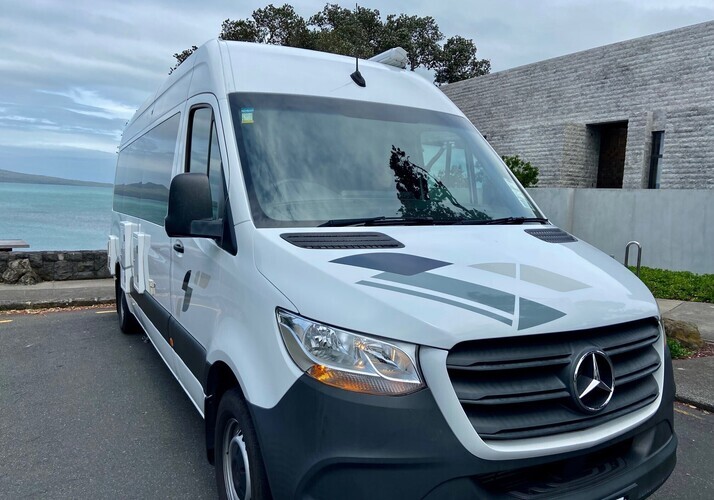
Responds rapidly
Auckland

Edwin
5.0 (6)
3
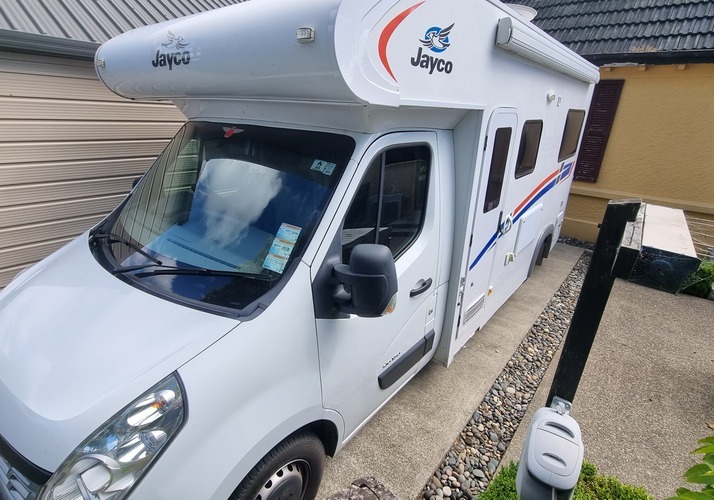
Responds rapidly
Invercargill
Bill
5.0 (5)
2

Responds rapidly
Ōtaki Beach

Eldon
4.9 (4)
6
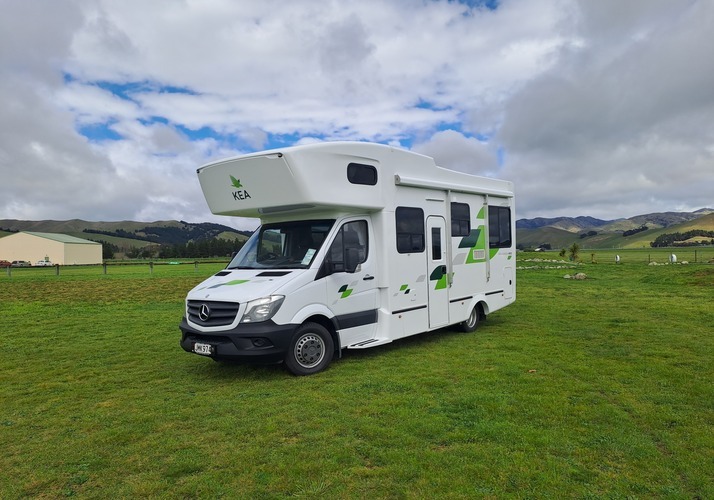
Hirer favourite
Renwick
Adam
5.0 (14)
6
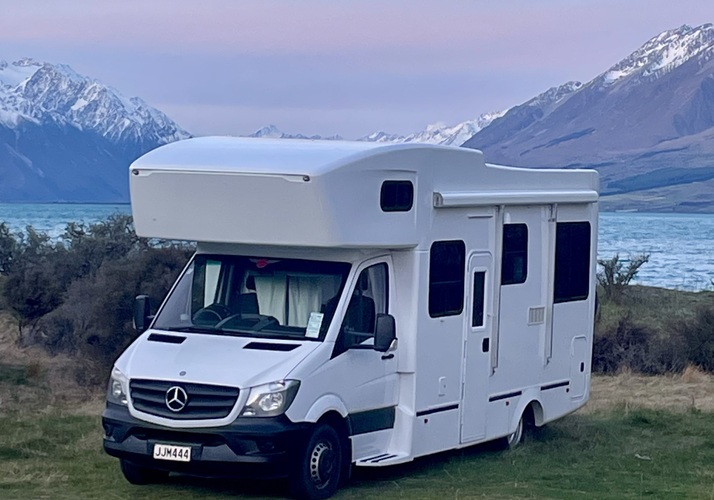
Hirer favourite
Kelvin Heights

Ross & Katherine
5.0 (24)
4
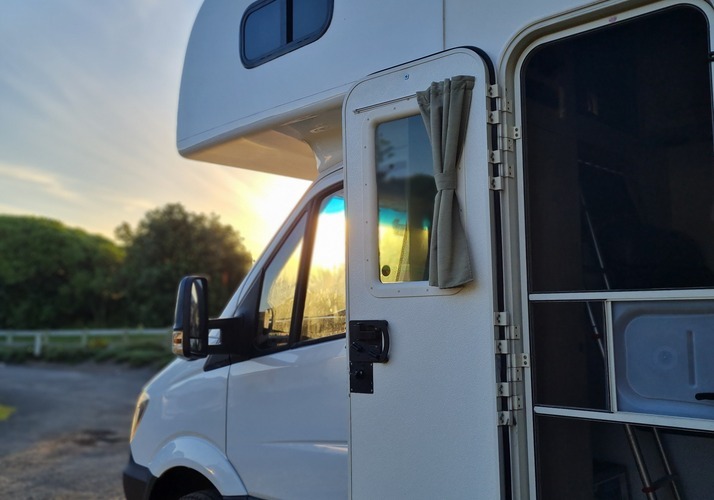
Responds rapidly
Raglan

Peter
5.0 (7)
6

Responds rapidly
Richmond

Sandy
5.0 (8)
4
)
Rows of houses, a flat horizon, the same grey drizzle. New Zealand is the opposite: a lake to yourself at dawn, a mountain road with no traffic, a different view from the window every night, and the space to take three or four weeks over it. The trip is real. It just needs locking in - the flight from Amsterdam is the longest part of the planning. New Zealand summer runs December to February, and autumn stays clear and quiet with fewer people on the road.
)
New Zealand is one of the few countries where you can legally sleep in a campervan beside a lake, on a coastal headland, or at a remote Department of Conservation site, with no campground booking and no fee. The key is Certified Self-Containment: a campervan that carries its own fresh water, wastewater storage, and a fixed toilet, so it can stay overnight without leaving a trace.
New Zealand tightened the rules in 2025 and certified vehicles now carry a green warrant card, with councils enforcing through fines of around NZD 400. Many Camplify owners have renewed under the new rules - ask before booking and the owner tells you the vehicle's current status.
)
10 days down the South Island
Christchurch, Tekapo, Mount Cook, Wanaka, Queenstown, Te Anau, Milford Sound, Dunedin, Kaikoura. The classic South Island lap - the core of most Dutch rondreizen, with room to extend.
)
Auckland to Christchurch road trip
Drive south through Wellington, cross on the Interislander ferry to Picton, then over the Southern Alps. The natural spine of a full North + South lap.
)
6 days around the North Island
Auckland, the Coromandel, Rotorua geothermal country, Lake Taupo, the Tongariro Alpine Crossing, finishing in Wellington.
)
A van adventurer's guide to Wanaka
Where to camp, where to walk, the best freedom-camping spots, and when to go. Wanaka is the South Island's alpine centrepiece.
)
Beginner's guide to freedom camping
How the green-certification system works, where to freedom-camp legally, the apps you need, and the etiquette that keeps it free.
)
9 things to know before you road trip NZ
Practical reading from Kiwi owners: pace, weather, what to pack, and how to plan around the Cook Strait ferry crossing.
)
Driving on the left. The biggest adjustment for Dutch drivers is the left-hand side of the road, roundabouts especially. Take the first stretch slowly and let the owner talk you through the controls - most people have it within a day.
Distances. New Zealand looks compact, and it is, but the roads are winding two-lane highways, not motorways. Christchurch to Queenstown is about 6 hours, Auckland to Wellington about 8. Plan a 60 km/h average and a three-week rondreis covers a lot without rushing.
The ferry. A full North + South lap crosses Cook Strait by ferry, Wellington to Picton in about 3.5 hours, campervans welcome. Book ahead for December and January, when spaces fill weeks out.
)
The three or four week rondreis
A full North and South Island lap: Auckland and the Coromandel, the Interislander ferry, then Tekapo, Aoraki, Wanaka and Milford Sound. Three weeks is the sweet spot, and a self-contained campervan keeps the accommodation budget low the whole way.
)
Visiting family who emigrated
New Zealand has a large Dutch community from the post-war years. A campervan lets you base near family, come and go on your own schedule, and still see the country between visits - no hotel bills stacking up.
)
The independent explorer
An individuele rondreis, not a coach tour: change the plan over breakfast, take the side road, stay an extra night where it is worth it. The South Island back roads reward travellers who like to find their own way.
Most Dutch travellers do not pick up the campervan the morning after they land. Pick the pattern that fits your rondreis.
Land in Auckland or Christchurch, take two or three days for the jet lag and the city, then collect the campervan when you are ready. Owners are flexible on the start date.
Use the near-airport search filter to find campervans a short transfer from AKL, CHC or ZQN, so you can be on the road the same day you arrive.
Fly into Auckland, drive the length of the country, and fly home from Queenstown or Christchurch. Arrange one-way collection with the owner, or hire again in the destination city.
)
A typical Camplify host hires out their self-contained campervan during the months they are not using it. Many have hosted international travellers before and are happy to meet you at an airport hotel so the first morning is easy.
Owner-listed campervans come with the bedding the owner chose, a kettle, a fridge that fits a week of groceries, a current self-containment certificate, and route notes from trips they have driven themselves. Messages run through the Camplify app, so everything stays on record if the navigation sends you somewhere unexpected.
Pick up from a New Zealand gateway city and head for the mountains, the lakes, or the coast. Most Dutch travellers start in Auckland or Christchurch and do a full lap of both islands.
)
Auckland
The most common arrival point. Gateway to the Coromandel, the Bay of Islands, Rotorua, and the Interislander ferry south. Many international flights land here, and the campervan is waiting.
)
Christchurch
The South Island gateway. Tekapo, Aoraki Mount Cook, Wanaka and Queenstown all sit within a day's drive, and chain hire is available locally for the winter alpine passes.
)
Queenstown
The South Island scenic base. Milford Sound, Glenorchy, the Routeburn and Wanaka are all day trips, and it is the closest airport to Milford Sound.
)
Wellington
The capital and the ferry terminal for the Interislander south to Picton. Compact, walkable, and the natural midpoint of a full North + South lap.
Can I hire a campervan in New Zealand on my Dutch licence?
Yes. New Zealand accepts a valid Dutch driving licence for stays under 12 months when it is accompanied by an International Driving Permit (IDP), which you arrange through the ANWB before you travel. A category B licence covers campervans up to 3,500 kg, which is most of the fleet. Carry your licence, the IDP, and your passport while you drive.
Is it hard to drive on the left if I am used to the right?
It is the main adjustment. The first hour feels unfamiliar, roundabouts most of all, but the basics come quickly and most drivers settle within a day. Take the first stretch slowly, and the owner runs you through the controls at handover. NZ roads are winding rural highways, so a 60 km/h average is normal.
How long should a New Zealand rondreis be?
Most Dutch travellers take around three weeks, which is enough for a full North and South Island lap without rushing. Two weeks suits a thorough South Island loop. Four weeks lets you slow right down and add the side roads and Great Walks, and some travellers take a career break or sabbatical and stay six weeks or more. The long haul from the Netherlands is the one big time cost - once you land, the time is yours.
Will the campervan be Certified Self-Contained for freedom camping?
Many are, and you should ask the owner to confirm before booking. New Zealand tightened the rules in 2025, and certified vehicles now carry a green warrant card. A certified campervan can park overnight at hundreds of Department of Conservation and council freedom-camping sites at no accommodation cost. Apps like CamperMate and Rankers show the legal spots, and fines for non-compliance are around NZD 400.
Can I take the campervan between the North and South Islands?
Yes, and for a full lap you will. The Cook Strait ferry crosses Wellington to Picton in about 3.5 hours and carries campervans, for around NZD 200 to 400 each way for the vehicle plus passengers. Book ahead, because the December and January sailings fill weeks out. The crossing through the Marlborough Sounds is a highlight in itself.
Can I pick up in one city and drop off in another?
Often yes. Some owners offer one-way hire, and you can also arrange one-way collection so you fly into Auckland, drive the length of the country, and fly home from Queenstown or Christchurch. Confirm the arrangement with the owner before booking.
Is renting from a private owner good value?
It often is. You hire directly from the owner (particulier) rather than a fleet, so you get a real, lived-in vehicle with local route notes, usually at a fair price. Discounts for longer stays, like a three-week rondreis, apply automatically on the booking screen when you select the dates - there is no need to haggle.
What if the campervan breaks down somewhere remote?
Every Camplify hire includes 24/7 roadside assistance covered by the booking fee. The owner is also reachable through the Camplify app, and most arrange a replacement or a holiday-park night if an issue cannot be fixed roadside. Mobile coverage is good on main routes, while Fiordland and the West Coast have patchy spots, so download offline maps before you leave.
What protection is included?
Every Camplify hire includes comprehensive protection with damage and third-party liability coverage. Each listing shows the excess and what is covered, and excess reduction options lower the excess at booking if you want extra peace of mind.
When is the best time to drive New Zealand from the Netherlands?
December through February is New Zealand summer, with the warmest weather and longest days - it lines up with the Dutch winter, so it is a true escape. March through May is autumn: quieter roads, still pleasant, golden light on the mountains. June through August is the South Island ski season. Dutch travellers tend to book early - around three months ahead is typical, and sensible for the summer peak.
How do I pay, and does my Dutch card work?
Visa and Mastercard work through Camplify. You pay in NZD and your bank handles the conversion from euros, with no New Zealand bank account needed.
Will my Dutch phone work, or do I need a local SIM?
Dutch plans roam in New Zealand, but daily charges add up on a long rondreis. A cheaper option is a local prepaid SIM at the airport, where Spark and One NZ cover the main routes, or an international eSIM before you fly. Download offline maps for Fiordland and the West Coast, where coverage is patchy.
Live listings from owners around New Zealand. Two-berth campervans for couples, larger motorhomes for longer trips, automatic transmission, and self-contained vehicles for freedom camping. Most sit within a short transfer of a gateway airport. Open the full search.

Responds rapidly
Auckland

YZcamper
4.8 (5)
3

Responds rapidly
Auckland
YZcamper
4.5 (7)
3

Responds rapidly
Auckland
YZcamper
4.5 (5)
3

Responds reliably
Auckland

Johana
4.9 (2)
2

Responds rapidly
Paihia

Ulrich
5.0 (4)
2

Responds rapidly
Queenstown

Jim
4.9 (8)
2

Responds rapidly
Queenstown

Danielle
4.7 (6)
3
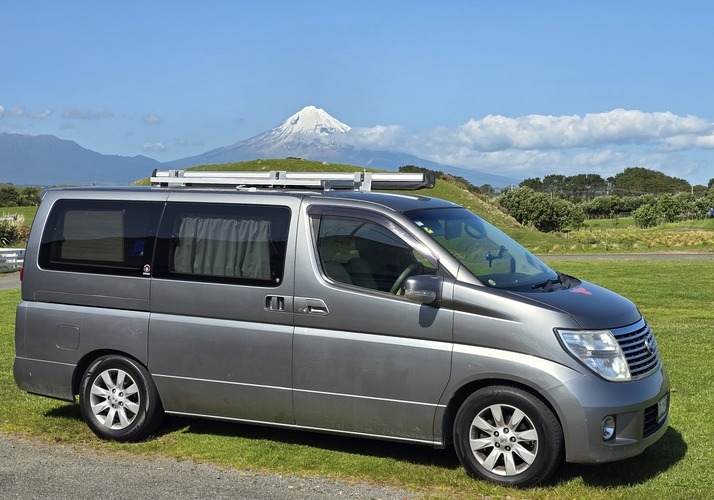
Responds rapidly
Hamilton
Kim
4.8 (11)
2